




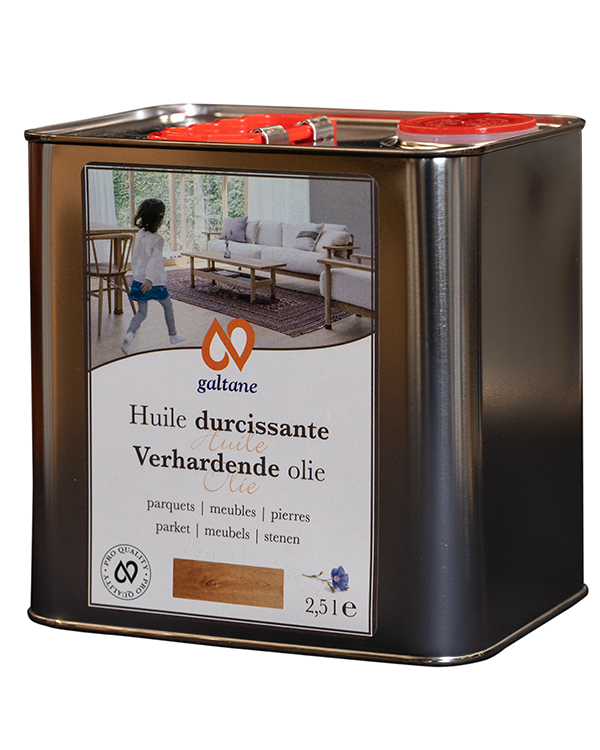
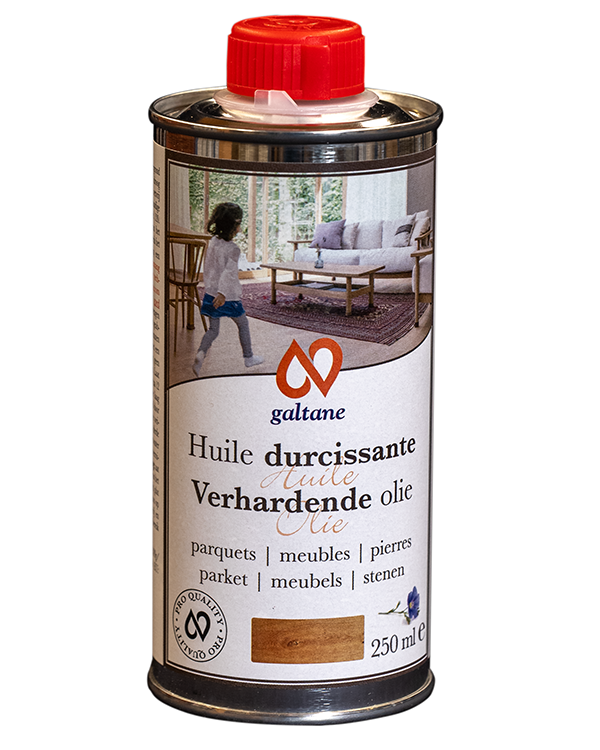
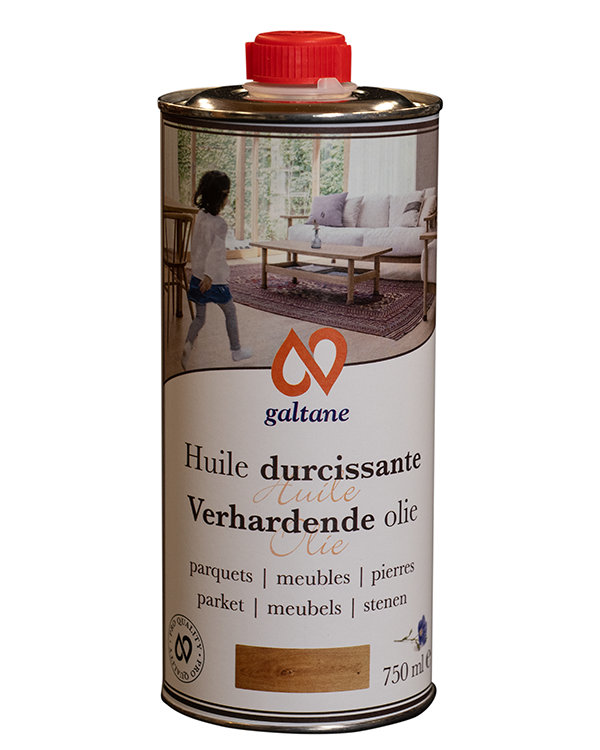
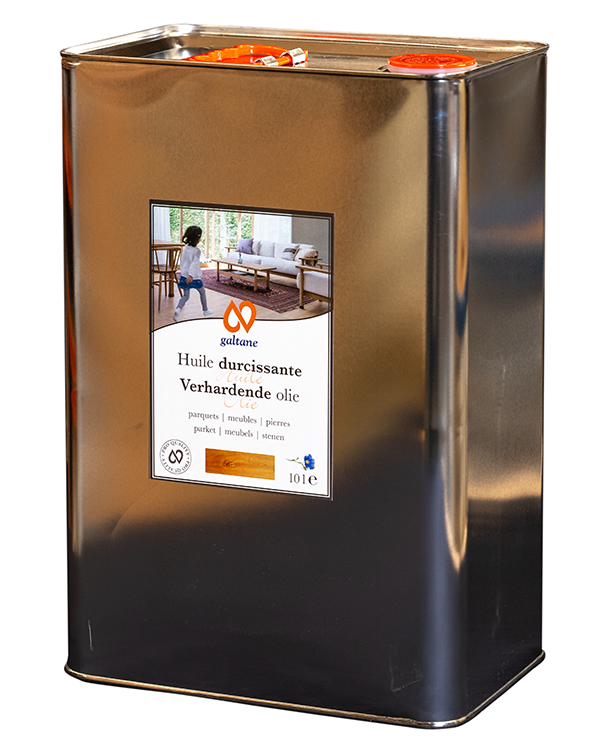




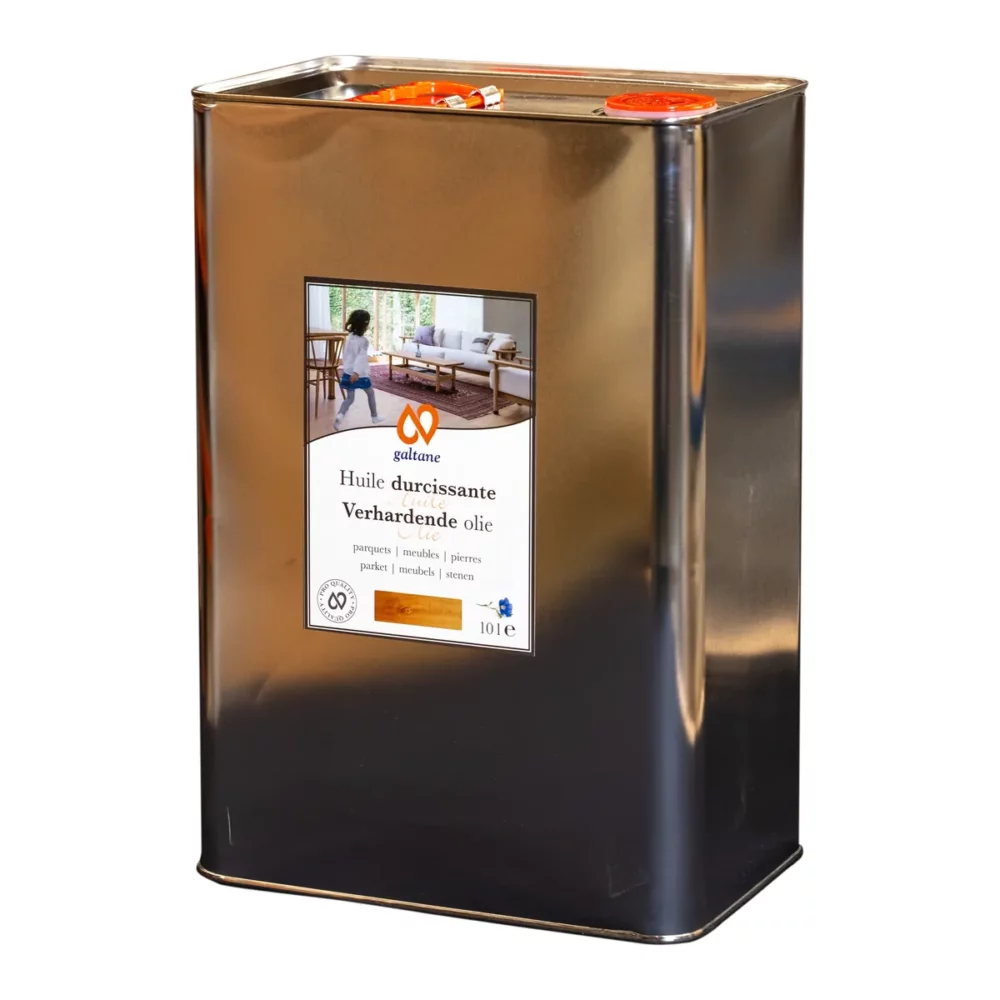
Hardening linseed oil
Additional details
Good to know
If Hardening Oil is applied as a second coat, apply it in a thin layer with a cloth or white pad. Applying oil is an impregnation technique; you are not forming a film! Lay cloths, sander bag dust, and oil-soaked work clothes flat to dry in fresh air: risk of spontaneous combustion.Good to Know
- What should you do if the surface is slow to dry, sticky, or shiny after application?
Excess oil forms shiny, sticky patches that are difficult to dry; to remove them, rub the surface with a maroon abrasive pad (Siavlies: synthetic fibers for sanding and matting wood surfaces) to “rub away” the excess oil from the wood surface. The advantage of the abrasive pad is that it doesn’t clog up after 5 seconds, creates no dust, and doesn’t pull the oil out of the substrate.
Next, if the surface is uniform, you’re done. If there are marks left from the pad, apply an ultra-thin coat of Hardening Oil with a cloth to even out the color of your floor.
We advise you to always perform a test on a ¼ m² area before applying the solution to the entire surface. Each color of abrasive pad corresponds to a different level of abrasion. Don’t use a white one; it’s too soft and won’t do anything. Green and black are more abrasive than maroon.
Technical specifications
| Coverage | 15 m²/l |
|---|---|
| Coats | 2 |
| Drying time | 24 hours at 68°F |
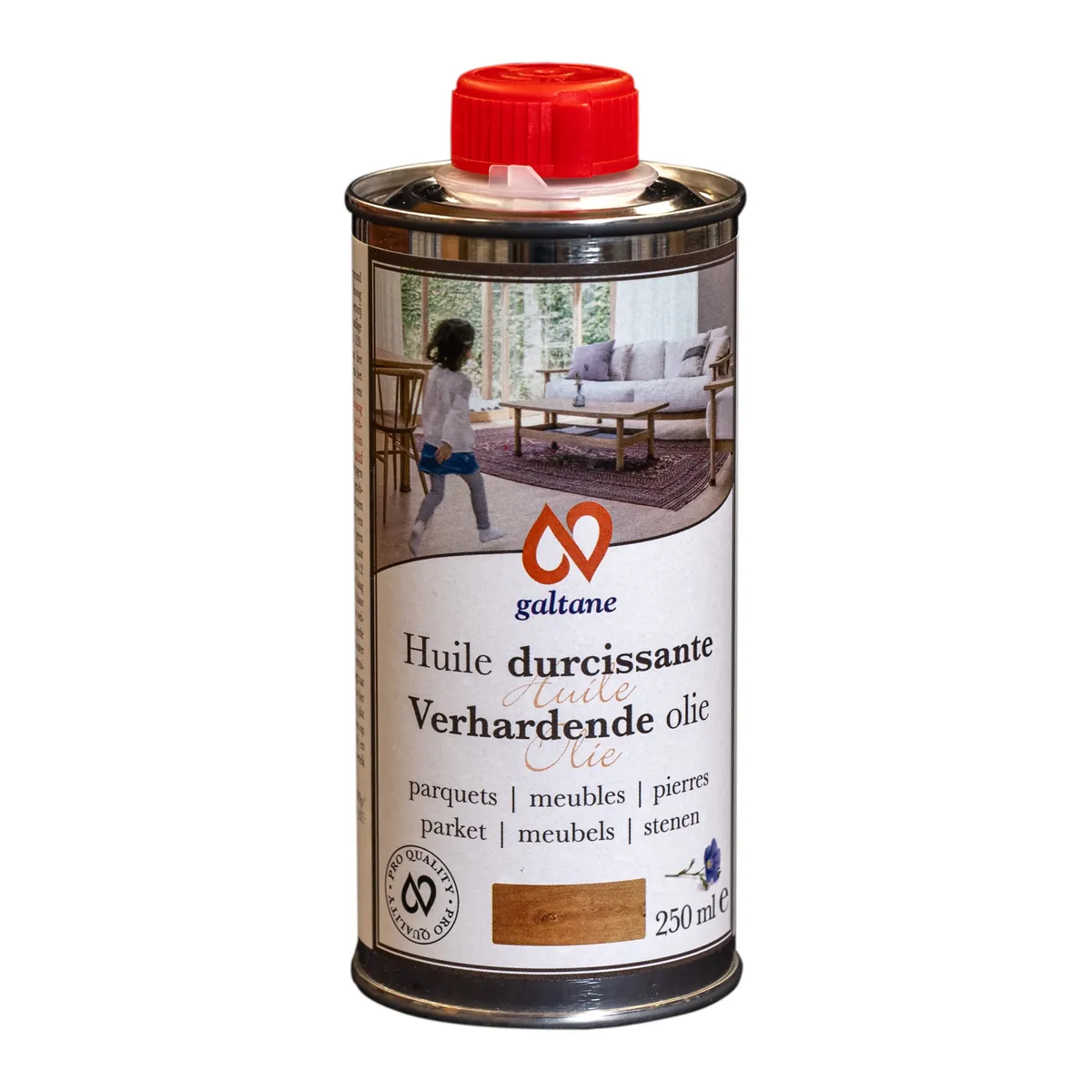
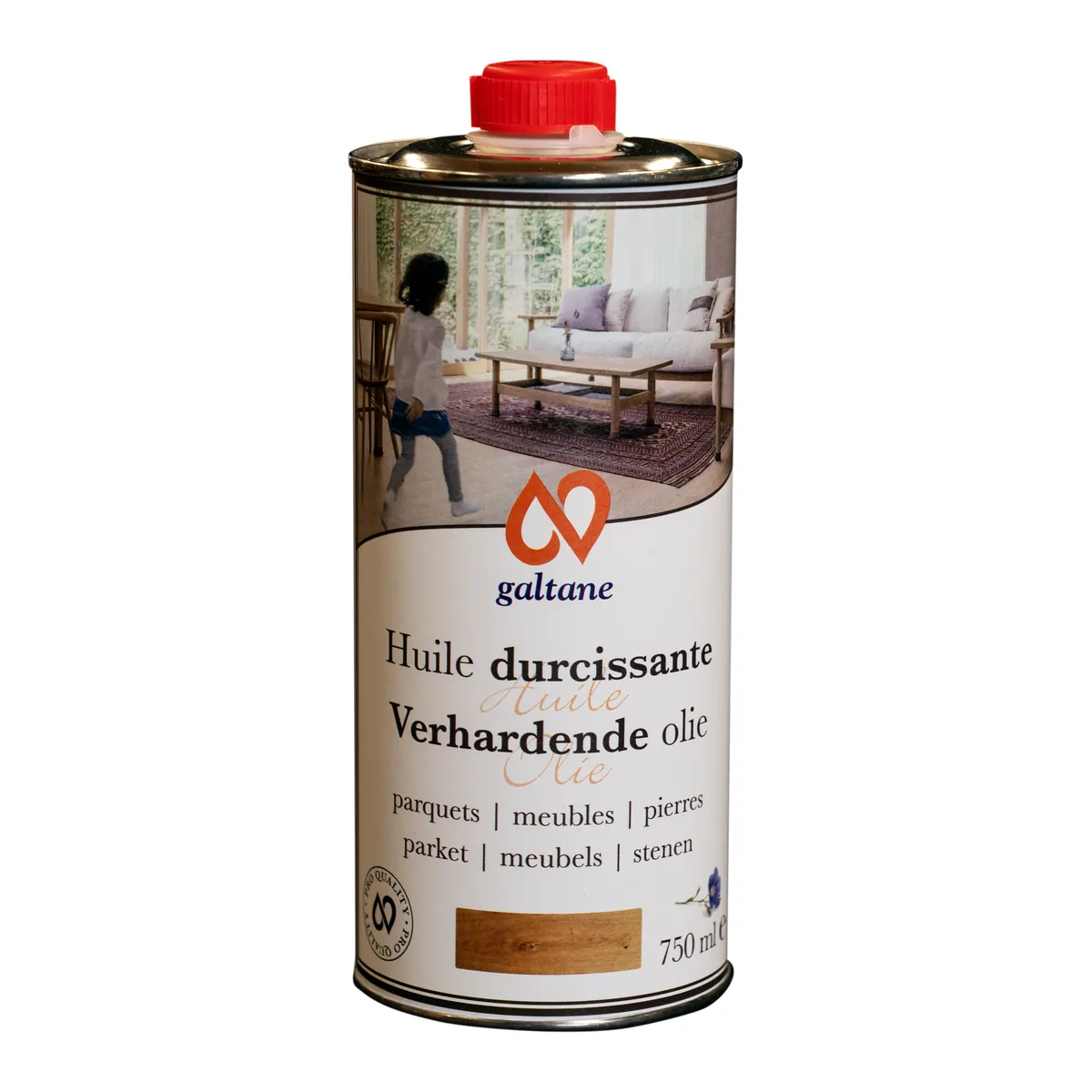
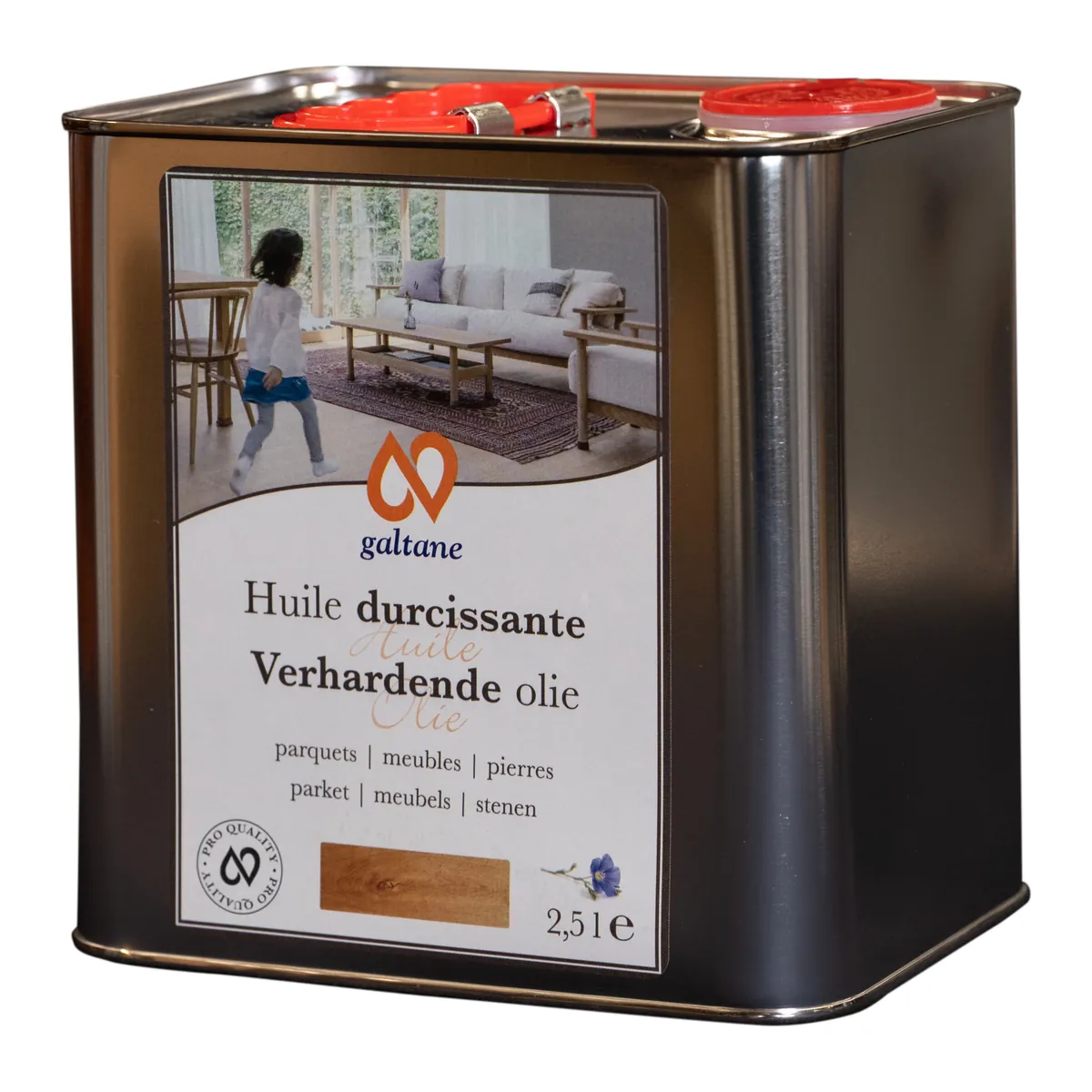
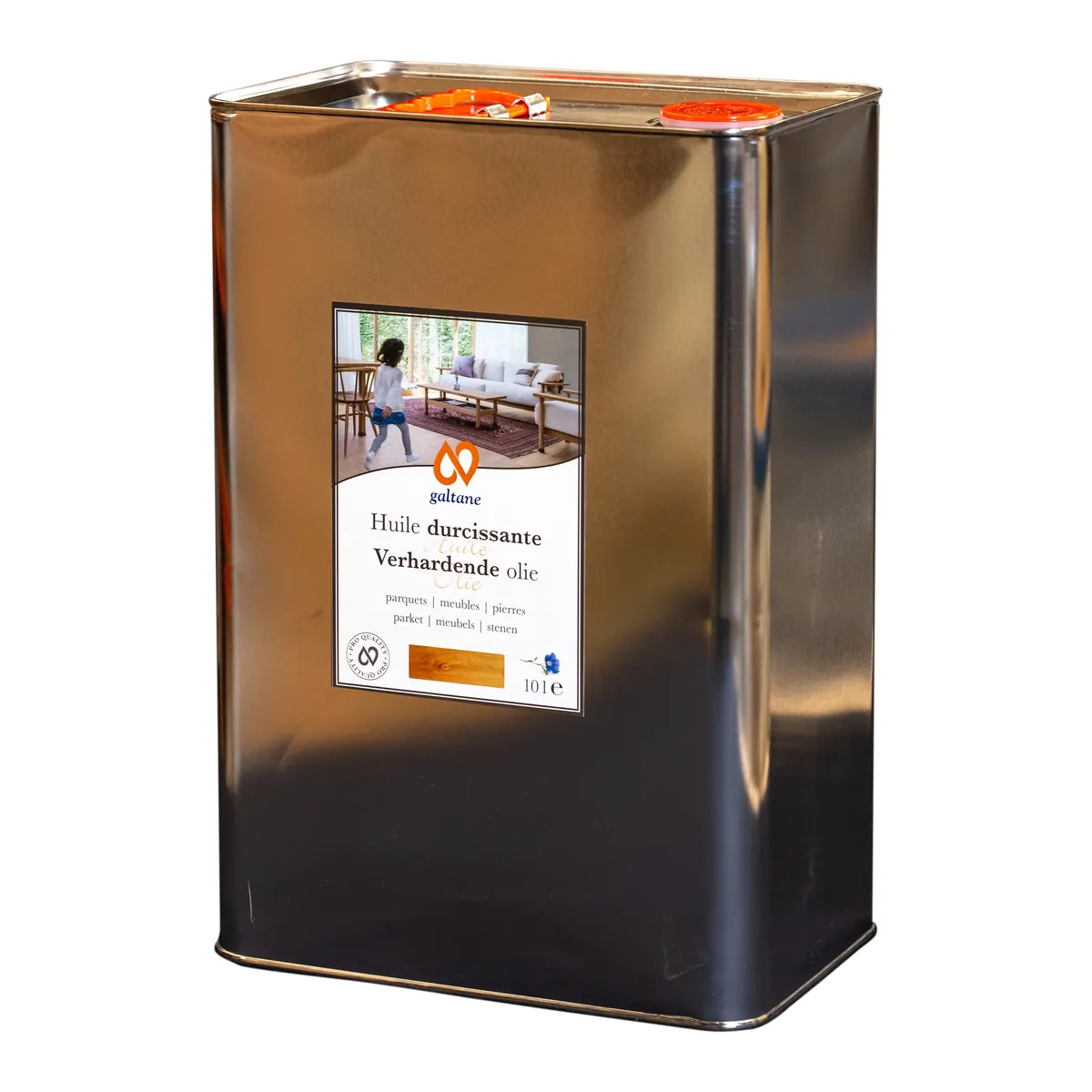
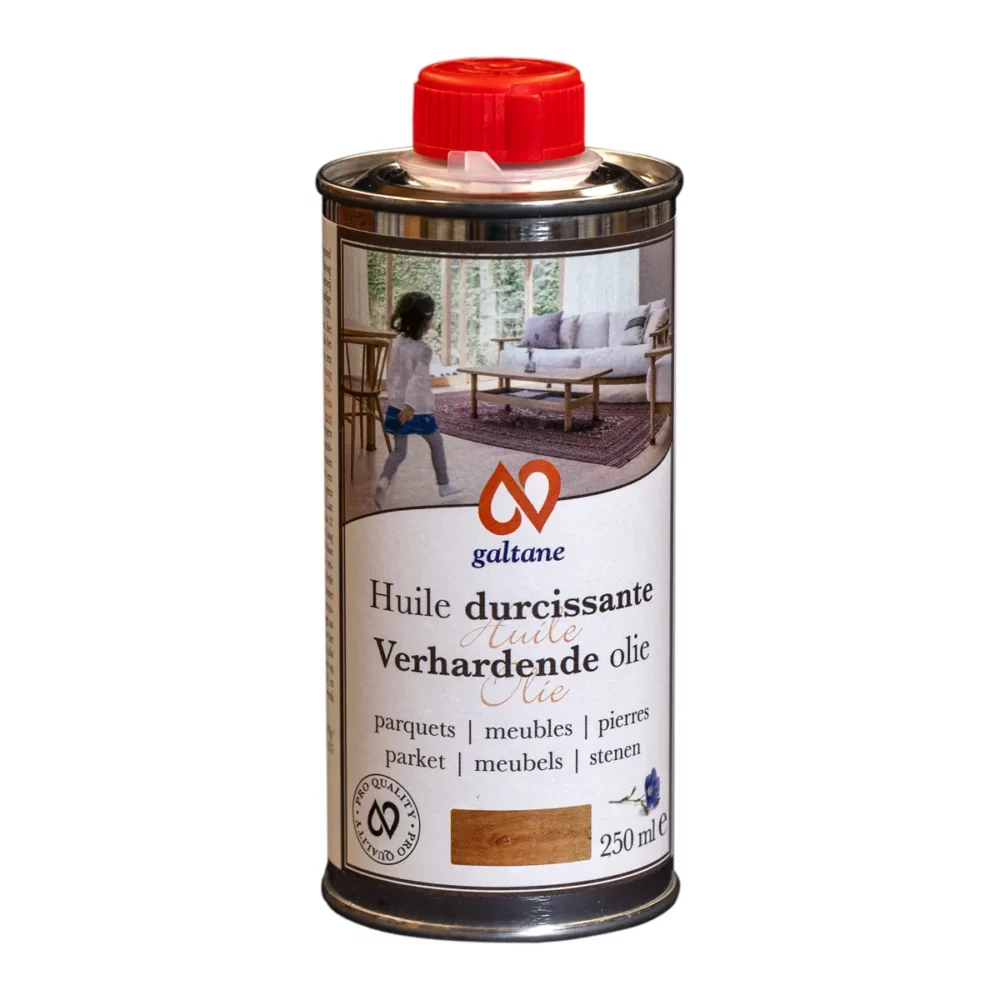
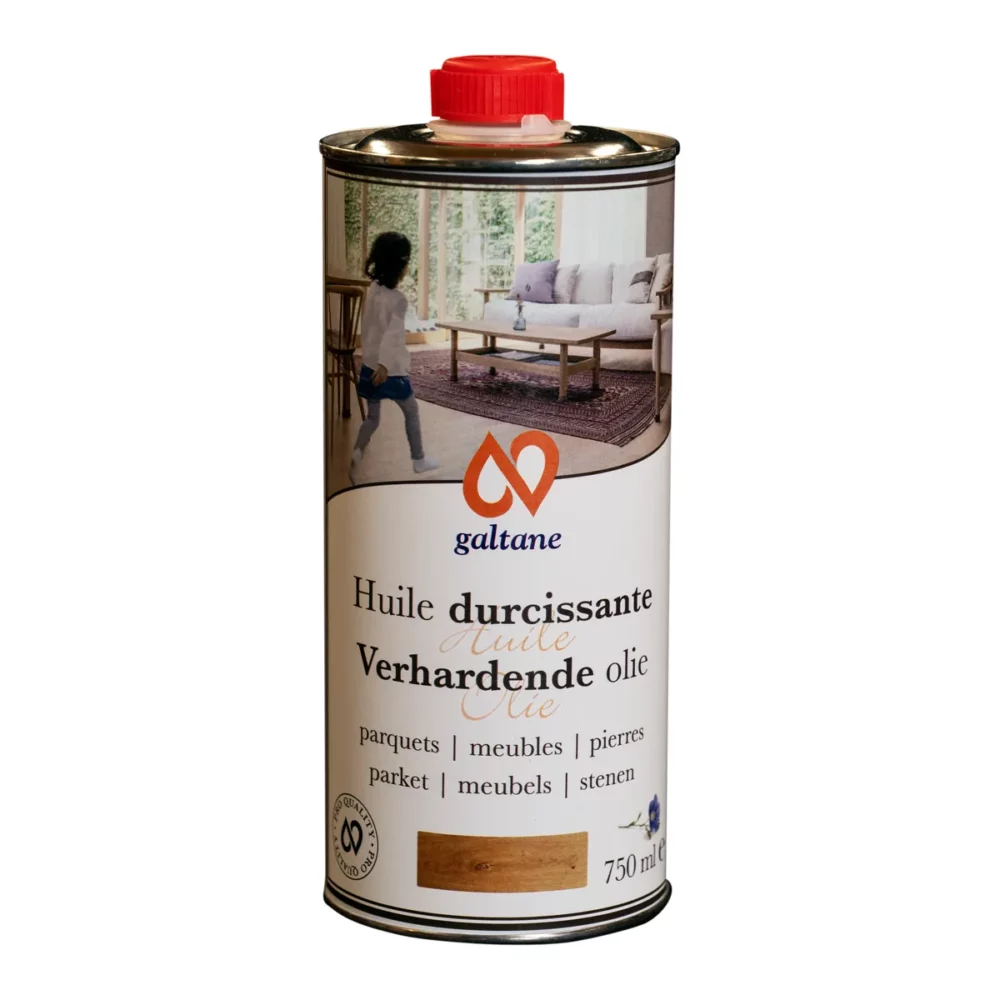
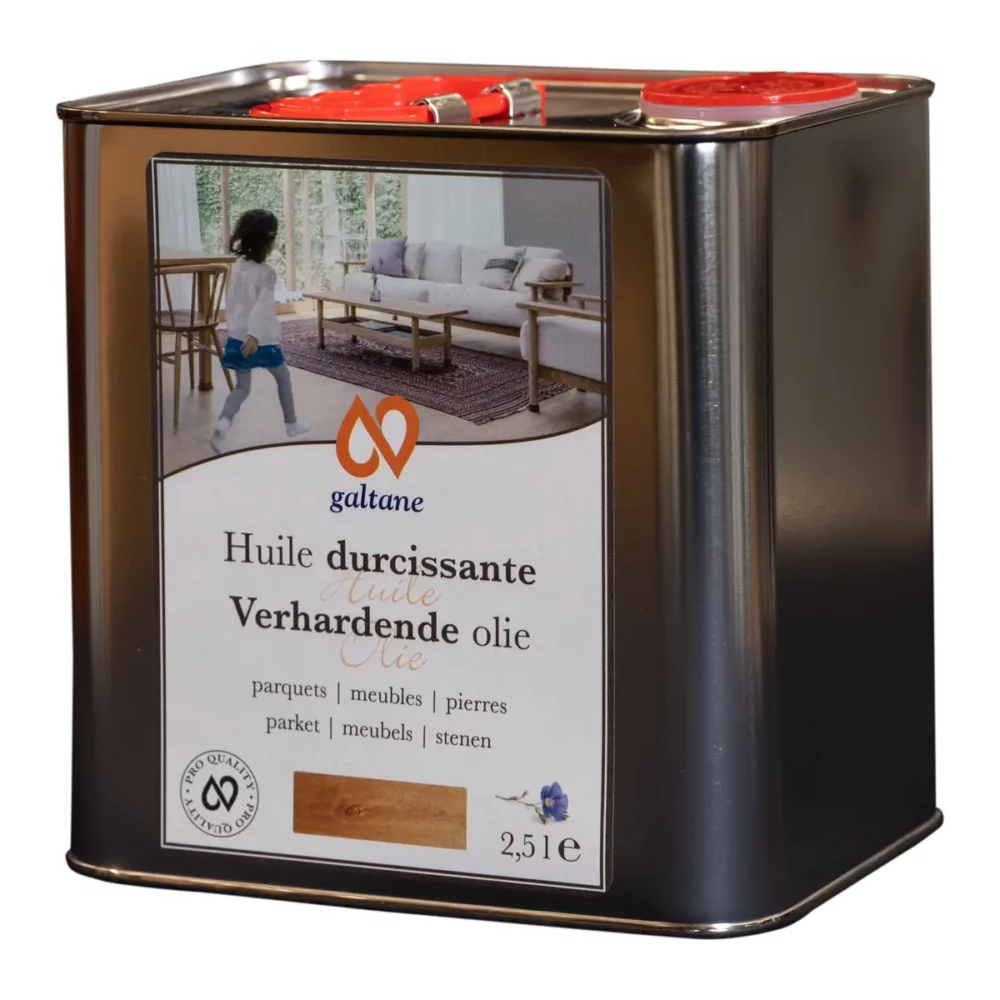
| Pack size | 250 ml, 750 ml, 2.5 L, 2.64 gal |
Technical Data Sheets
Safety Data Sheets
Any questions?
Related products
-
 33,30 € – 241,10 €Price range: 33,30 € through 241,10 €Select options This product has multiple variants. The options may be chosen on the product page
-
 15,00 € – 278,00 €Price range: 15,00 € through 278,00 €Select options This product has multiple variants. The options may be chosen on the product page
-
 38,20 € – 82,10 €Price range: 38,20 € through 82,10 €Select options This product has multiple variants. The options may be chosen on the product page
-
 46,60 € – 132,00 €Price range: 46,60 € through 132,00 €Select options This product has multiple variants. The options may be chosen on the product page
-
 46,60 € – 113,59 €Price range: 46,60 € through 113,59 €Select options This product has multiple variants. The options may be chosen on the product page
-
 30,79 € – 267,20 €Price range: 30,79 € through 267,20 €Select options This product has multiple variants. The options may be chosen on the product page
-

 13,30 €Select options This product has multiple variants. The options may be chosen on the product page
-

 11,80 € – 246,90 €Price range: 11,80 € through 246,90 €Select options This product has multiple variants. The options may be chosen on the product page
Learn More
Hardening linseed oil for wood – Galtane
Use
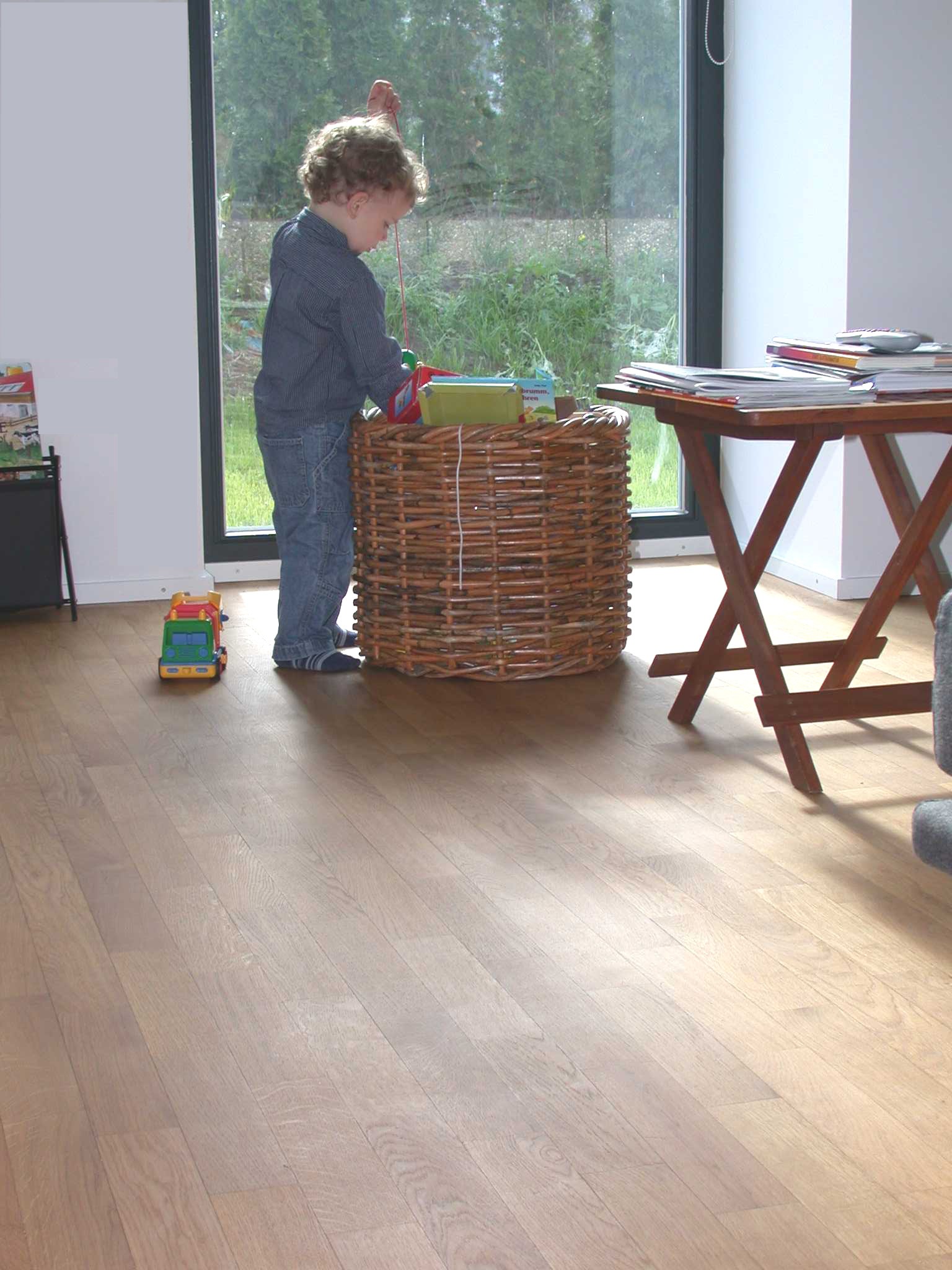
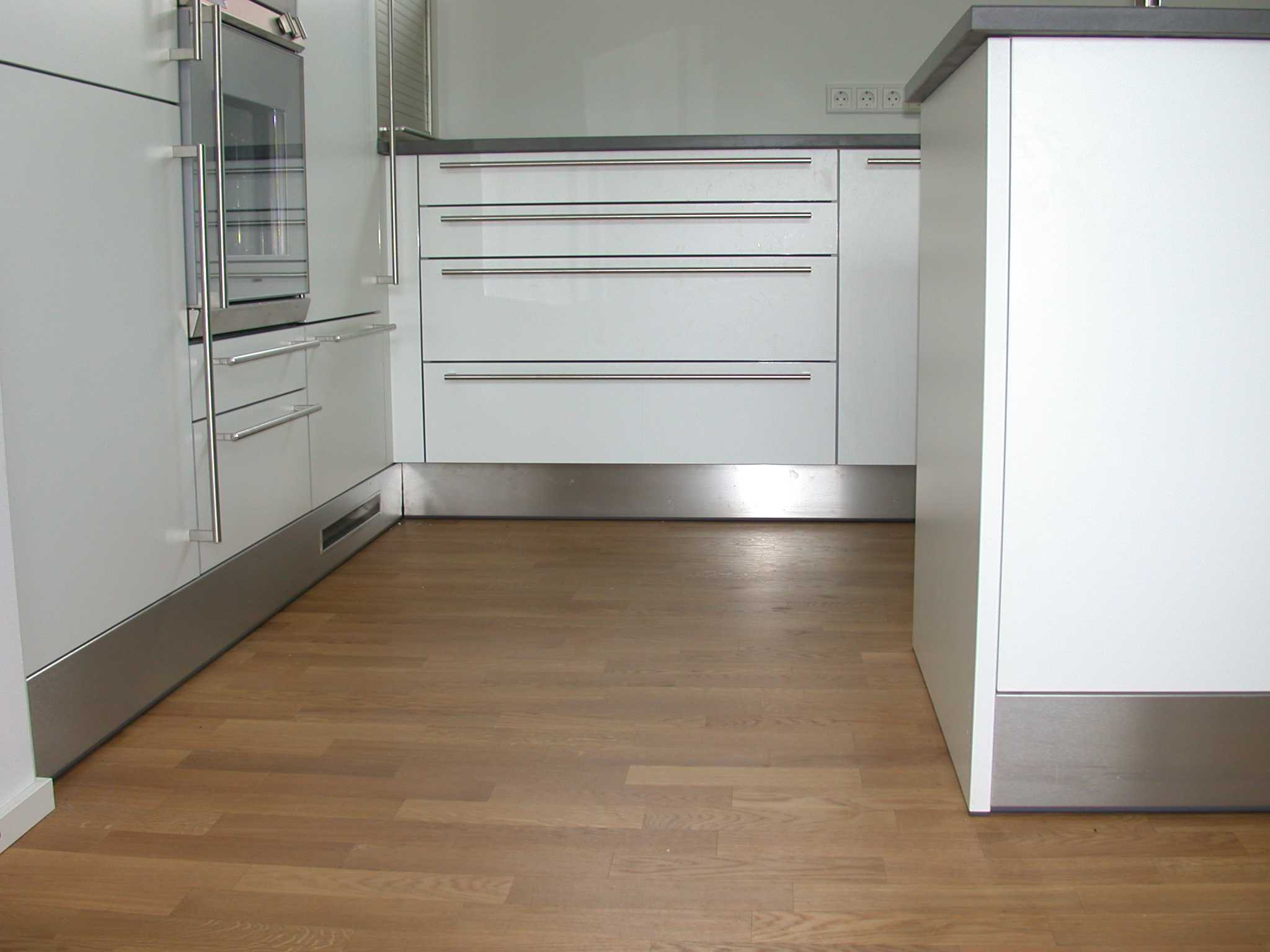
Galtane Hardening linseed oil is a natural oil for parquet and for the protection and finishing of high-traffic interior wood surfaces (floors, stairs, kitchen countertops, tables, furniture, etc.) as well as cork, linoleum, terracotta, natural stone, and porous cement or concrete. It offers easy application, good liquid resistance, and a matte-satin finish that is easy to maintain and renovate. With very high penetrating power, it is suitable for both soft and dense woods. Complies with EN 71/3 standards (suitable for children’s toys). The ideal product for a healthy and natural home.
Properties
Galtane linseed oil for parquet and wood gives wood a pleasant, natural surface. It revives the wood fibers. The oil penetrates the wood rather than covering it. It is antistatic and has a pleasant scent.
Composition
Linseed oil, boiled linseed oil (stand oil), rosin resins, silicic acid, cobalt-free driers (Manganese, Ca), isoparaffin, soy lecithin. VOC content: < 399 g/L (isoparaffin). Varnish: Cat A/e EU limit value: 400g/L.
Emissions
Indoor air emissions: A+
Tools for applying hardening linseed oil
We recommend the following tools for application:
- flat brush,
- cloth,
- roller,
- floor buffer.
Preparation
The surface must be porous, dry (<14% moisture content), clean, dust-free, non-greasy, and free of any chemical treatments. Remove old layers and residues of wax, varnish, etc., which could negatively affect the result. Thoroughly sand the surface, finishing with a maximum 120 grit, or 100 grit for oak. The finish of the hardening oil on wood—a non-homogeneous natural material—can significantly change the appearance of the surface; therefore, always perform a test on a scrap piece of wood before starting work on large areas.
Application
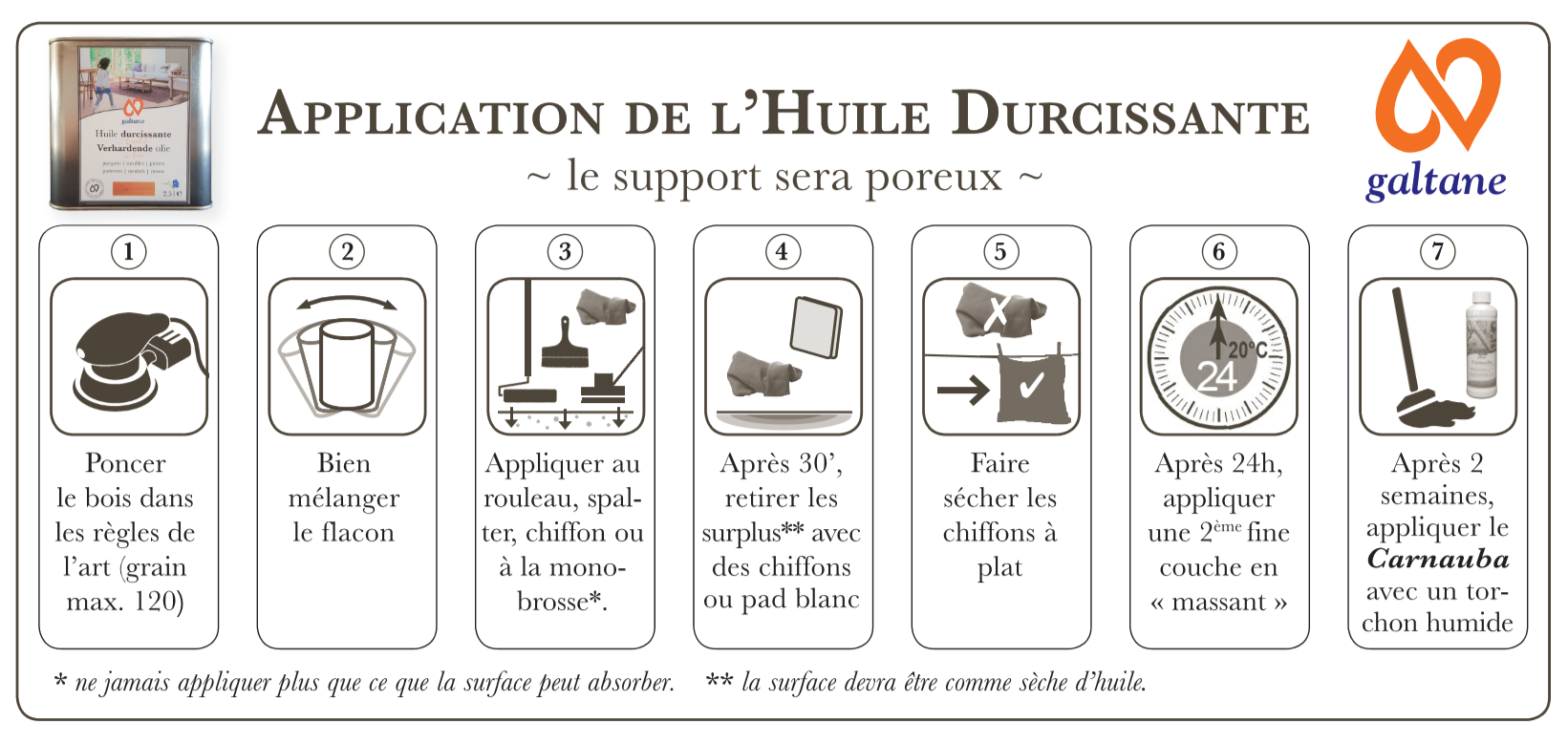
Shake the Hardening Oil well before use. Do not work below 15°C (59°F).
In high heat, the oil sets faster. We therefore recommend removing
excess oil more quickly.
On non-exotic wood
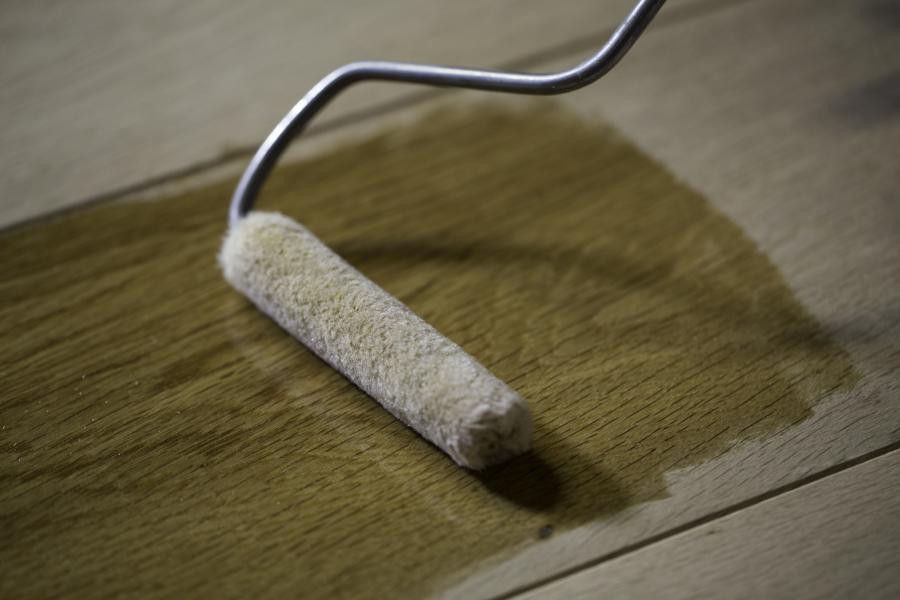
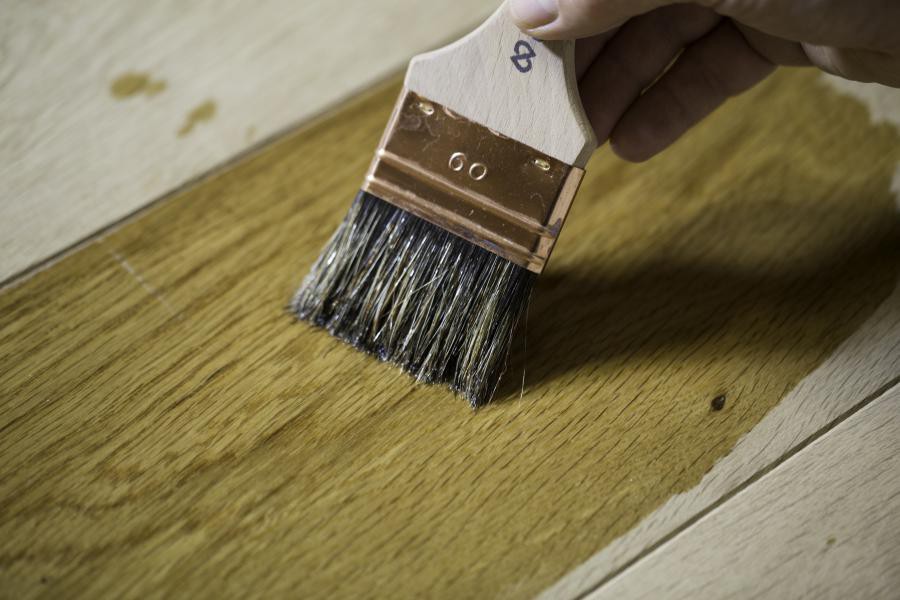
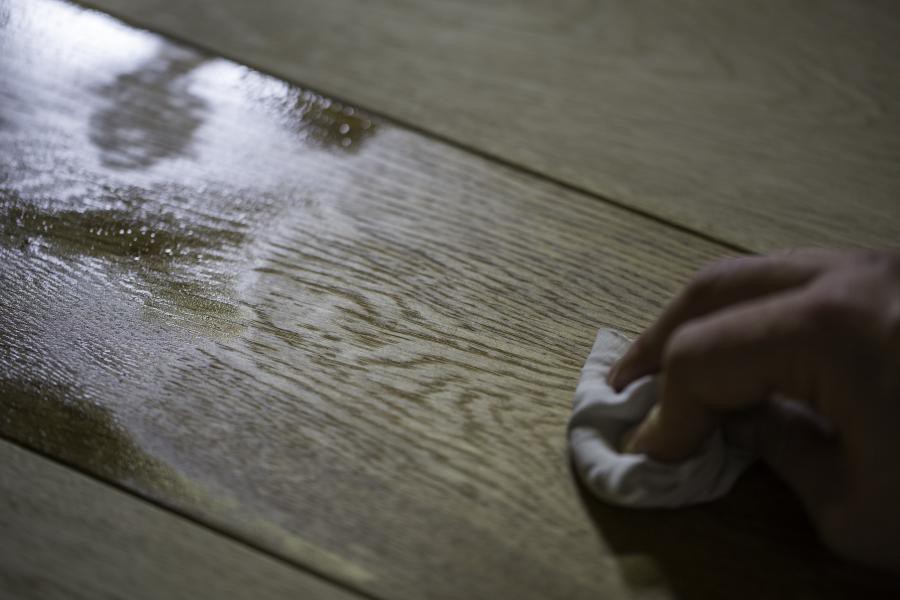
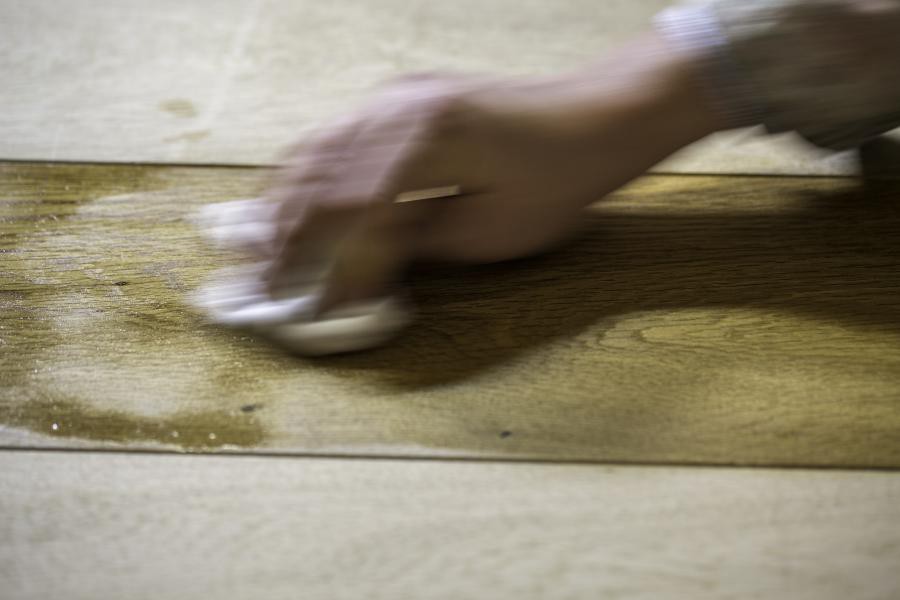
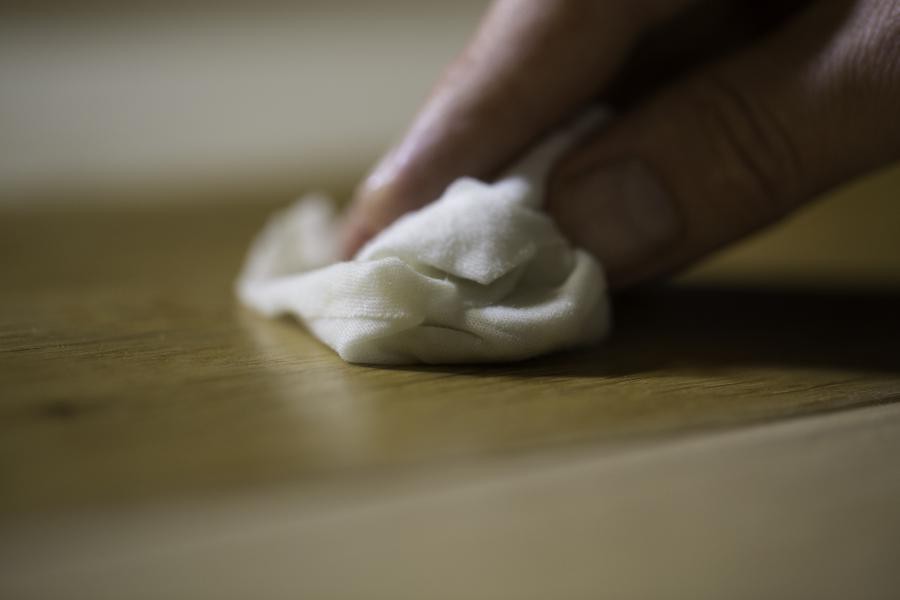
Apply one coat, as much as the wood can absorb, using a flat brush, lacquer roller, or cloth. After 30 minutes, remove excess with a lint-free cloth or a squeegee. No traces of oil should remain visible on the surface. You can also use a (white) pad: by hand or machine, this not only removes excess but also massages the oil into the wood and sands the surface. This results in a smooth, uniform surface.
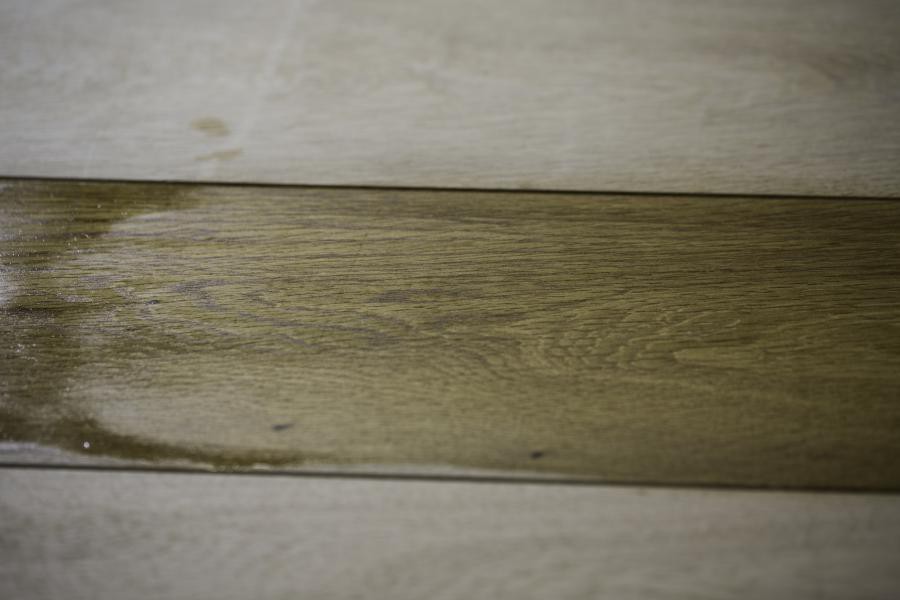
Excess oil forms shiny patches that are difficult to dry; to remove them, let dry completely before sanding with 80 to 120 grit or an abrasive pad (Siavlies: synthetic fibers for sanding and matting wood surfaces, medium type – 120 grit, red-brown or sometimes green). Always lay cloths flat to dry.
Applying oil is an impregnation technique; you are not forming a film! After 12 to 24 hours, if necessary, lightly sand with 120 grit paper or an abrasive pad (Siavlies: synthetic fibers for sanding and matting wood surfaces, medium type – 120 grit, red-brown or sometimes green). Vacuum.
Apply a second thin coat of oil with a cloth, massaging it in, or with a floor buffer. A third very thin coat applied with an oil-soaked cloth—though not essential—will improve the finish quality. Multiple coats create a uniform, water-repellent surface. The more coats applied, the more satin or even glossy the surface will become.
On exotic wood and bamboo
Apply in two very thin coats with a cloth. Do not pour oil directly onto beech; apply it with a cloth, flat brush, or roller.
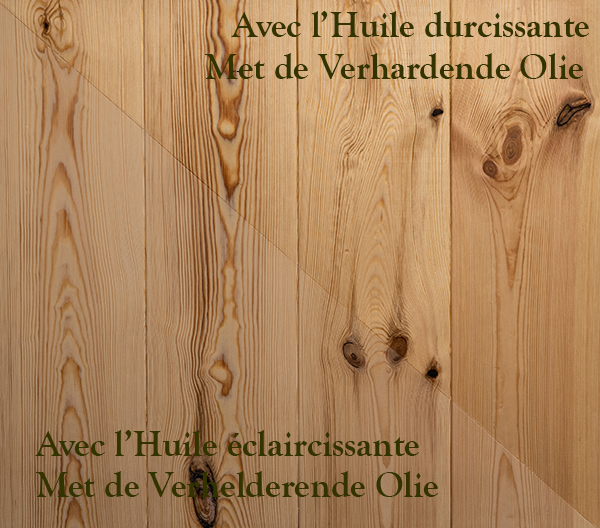
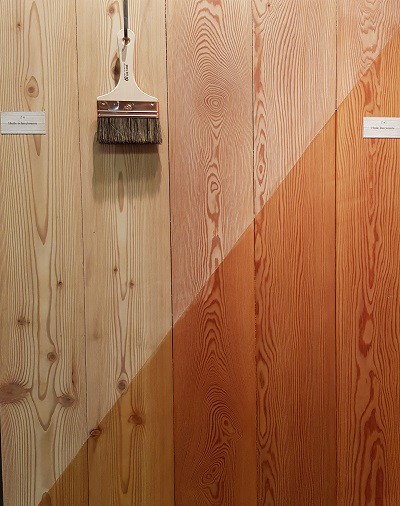
To prevent yellowing of European maple, we recommend applying a brightening primer. To tint a parquet floor, see the Tÿnto product (ref. 5040-5046).
You can also tint the parquet with a wood stain by applying 1 and 1 thin coat of Galtane Wood Stain (ref. 7010-7030) with a cloth. After 24 hours, lightly sand with an abrasive pad if necessary. Wait for the stain to dry completely to avoid bleeding (minimum 72 hours at 20°C / 68°F) before applying a thin coat (two if necessary) of Hardening Oil with a cloth, massaging it in.
On porous stone and porous concrete
Apply a thin, even coat to the surface with a cloth; use a flat brush for concrete. After 30 minutes, remove excess with a lint-free cloth or squeegee. No traces of oil should remain visible on the surface. Excess oil forms shiny patches that dry with difficulty. Repeat the process after 24 hours. Do not apply more than the stone can absorb! Often one coat is enough. Protect from rain for at least 24 hours if applying outdoors.
Drying
Recoatable after 12 to 24 hours at 20°C (68°F). Since drying occurs through reaction with oxygen, ensure fresh air intake during and after work, and maintain a temperature of 20°C (68°F). The drying process on woods containing antioxidants (Iroko, Padauk, Teak, etc.) may be significantly delayed.
Coverage
10 to 15 m²/L or 66 to 100 mL/m² depending on the porosity of the surface.
Cleaning tools
Use GALTANE “Vegetable Solvent” (ref. 2060)
Maintenance
Vacuum, clean the floor with GALTANE “All-Purpose Cleaner,” and protect with “Carnauba.” For stains, soak an abrasive pad (Siavlies: durable synthetic fibers for cleaning and sanding wood surfaces) with Hardening Oil, rub the stain, and wipe with a soft cloth.
Precautions and storage
Lay cloths, sander bag dust, and oil-soaked work clothes flat to dry in fresh air: risk of spontaneous combustion. Store in a cool place, protected from frost and light. Be aware of potential allergies. Dispose of residues at a waste collection center. Keep natural paints out of reach of children.
How to Apply